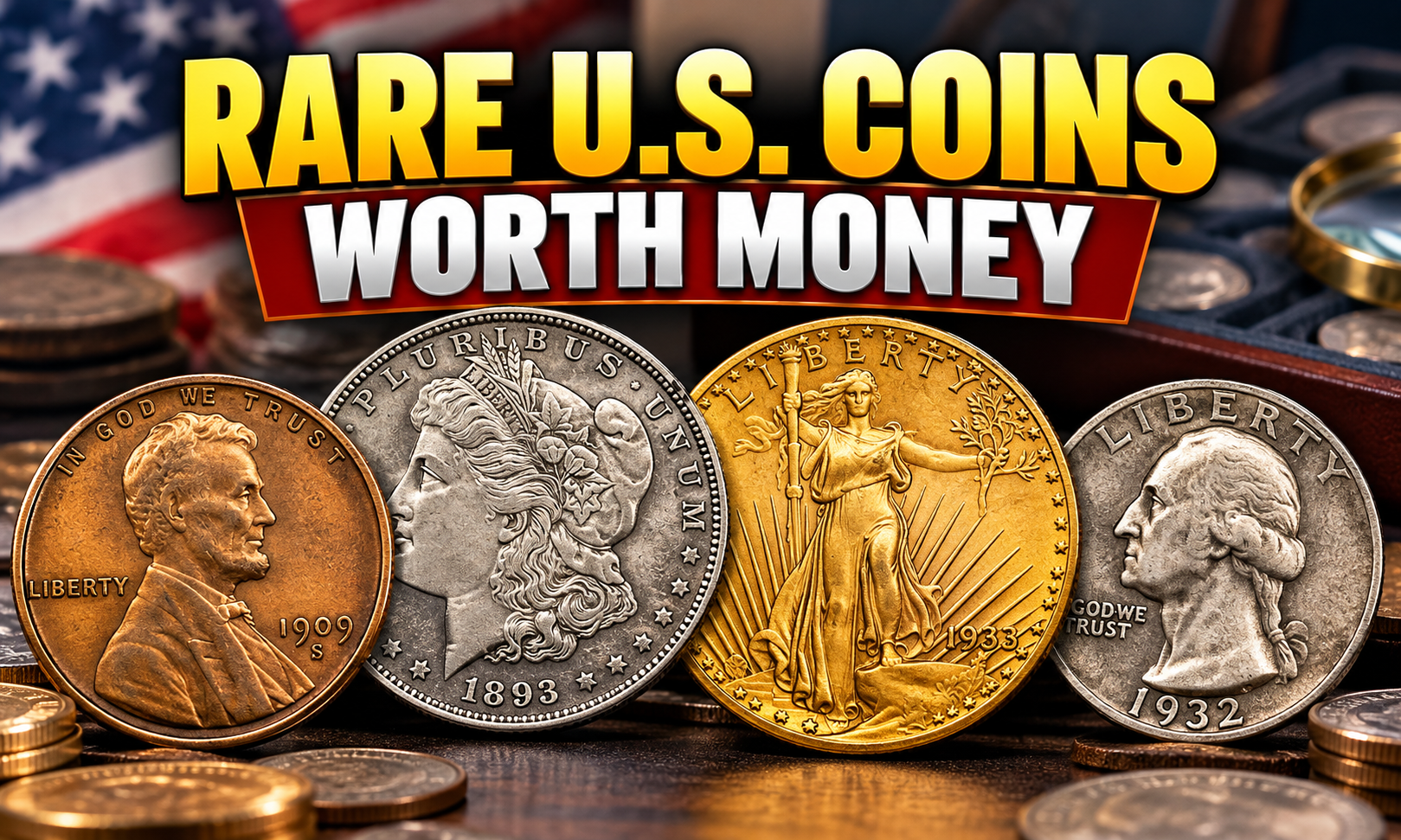
Imagine spotting a plain old penny in your change and learning it is worth more than a house. It sounds like a fairy tale. However, it has really happened. Rare US coins worth money still turn up in jars, drawers, and inherited boxes every year.
This guide shows you eight valuable coins, rough price ranges, and simple ways to check what you own. Let’s start the hunt.
In this guide:
- Quick answer
- Why some coins are valuable
- 8 coins to look for
- How to spot them fast
- Mistakes to avoid
- Key takeaways, FAQs, and conclusion
Which Rare US Coins Worth Money Should You Look For?
Quick answer: Rare US coins worth money include the 1943 copper Lincoln cent, the 1913 Liberty Head nickel, and the 1894-S Barber dime. Value depends on three things: low mintage, minting errors, and condition. Many key-date coins sell for hundreds of dollars even when worn, while the rarest examples reach six or seven figures.
Why Some Coins Are Worth More Than Face Value
Not every old coin is a jackpot. Four factors decide the price:
- Low mintage: Fewer coins made means more scarcity.
- Minting errors: Doubled dies and wrong metals create instant rarities.
- Condition: Sharp details and original luster add real value.
- Demand: Popular series attract more buyers, so prices rise.
Therefore, two coins from the same year can differ by thousands of dollars.
8 Rare US Coins Worth Money in 2026
Prices below are estimates. They change with the market, so always compare recent sold listings.
1. 1943 Copper Lincoln Cent
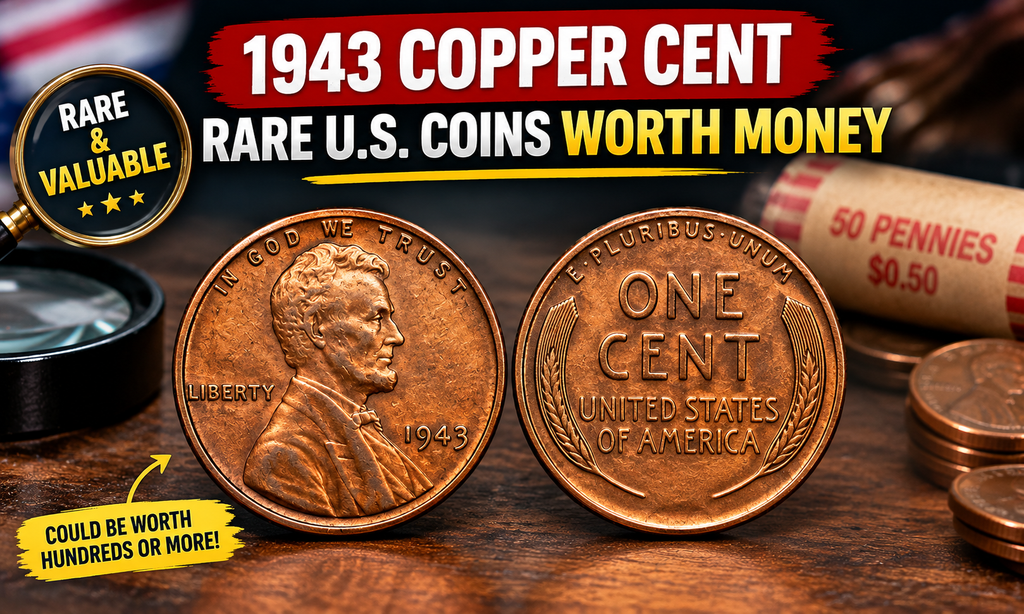
In 1943, the Mint used zinc-coated steel for cents. A few copper blanks were left in the presses by mistake. As a result, a handful of copper cents exist. Genuine pieces sell for well over $100,000. Test any 1943 cent with a magnet. A copper coin will not stick.
2. 1955 Doubled Die Lincoln Cent
This is the most famous error cent. The date and lettering look clearly doubled. Even worn examples often sell for $1,000 or more. Sharper coins bring several thousand dollars. Learn more about the series on Wikipedia’s Lincoln cent page.
3. 1909-S VDB Lincoln Cent
Only about 484,000 were made in San Francisco. Look for the “S” under the date and the tiny “VDB” initials on the reverse. Worn coins start around $700. Better grades cost much more.
4. 1914-D Lincoln Cent
Denver produced fewer cents that year, so collectors hunt this key date. Many fakes exist, however. Worn, genuine coins usually start near $200 and rise quickly with grade.
5. 1916-D Mercury Dime
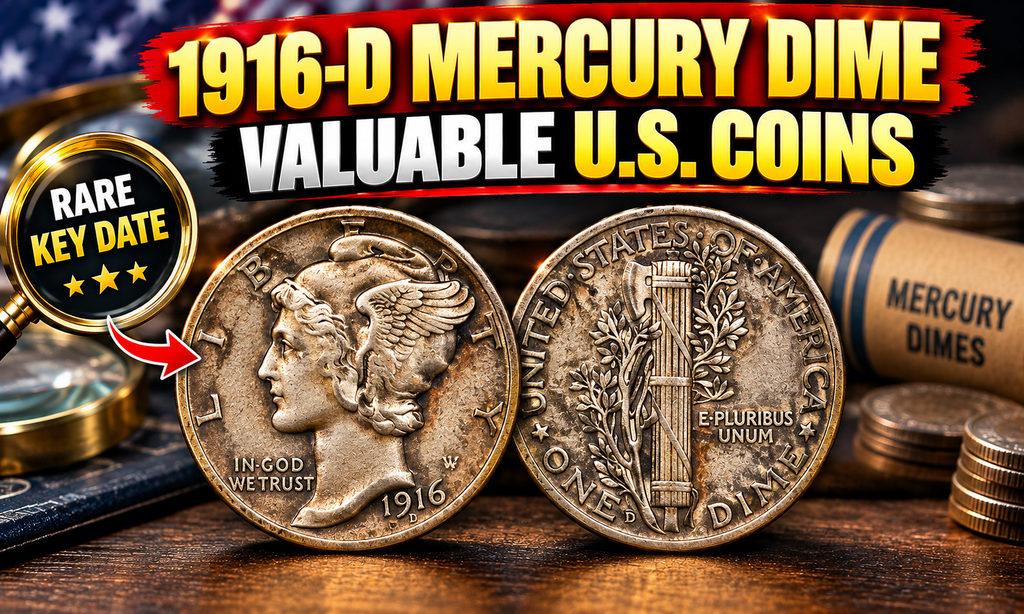
The Denver mint struck only 264,000 of these dimes. Therefore, even heavily worn coins often fetch $1,000 or more. Check the “D” mint mark above the fasces on the reverse.
6. 1932-S Washington Quarter
Low mintage made 1932 the key year for this series. Even worn coins often sell for $80 to $150. For a full breakdown, read our 1932-S Washington quarter value guide.
7. 1894-S Barber Dime
Only 24 were minted, and just a few survive. Consequently, this is one of the most valuable US coins ever sold, with auction results in the millions. You will almost certainly never find one. Still, it shows how far rarity can go.
8. 1913 Liberty Head Nickel
Only five are known to exist. They were made outside official records. One specimen sold for several million dollars at auction. Consider it the ultimate dream find.
Quick Insights: How to Spot Rare US Coins Worth Money
Use this checklist before you spend or sell anything:
- Check the date. Key dates like 1909, 1914, and 1916 deserve a closer look.
- Find the mint mark. “S” and “D” often mean lower mintage.
- Look for doubling. Use a magnifier on dates and lettering.
- Test the metal. A magnet exposes steel and copper mix-ups.
- Judge the condition. Wear lowers value quickly.
Error coins deserve special attention. For example, our guide to the 1965 silver quarter transitional error shows how a wrong metal can create a rarity.
Why It Matters
Many people sell coins for melt value without checking them first. That can be costly. One overlooked key date might be worth far more than a bag of ordinary coins.
On the other hand, not every silver coin is a treasure. A typical 1968-S proof Kennedy half dollar value sits around $6 to $12. Knowing the difference protects your wallet.
Collecting abroad? Our rare euro coins value list covers every eurozone denomination.
Common Mistakes to Avoid
- Cleaning coins: Polishing destroys original surfaces and cuts value sharply.
- Trusting online “deals”: Fakes of 1914-D cents and 1955 doubled dies are common.
- Skipping research: Compare sold prices on PCGS CoinFacts before selling.
- Handling coins carelessly: Hold them by the edges only.
Finally, get a professional opinion before selling any coin you think is worth over $500.
Key Takeaways
- Rare US coins worth money are usually low-mintage, error, or high-grade coins.
- Key dates like 1909-S, 1914-D, and 1916-D can be worth hundreds or thousands.
- The 1943 copper cent and 1955 doubled die lead the errors.
- Never clean a coin.
- Always check mint marks, dates, and condition first.
FAQs
1. What are the most valuable rare US coins worth money?
The 1913 Liberty Head nickel, 1894-S Barber dime, and 1943 copper cent lead the list. Each can sell for six or seven figures.
2. How do I know if my coin is rare?
Check the date, mint mark, and any visible errors. Then compare recent sold prices for similar coins.
3. Are old pennies worth money?
Some are. The 1909-S VDB, 1914-D, 1943 copper, and 1955 doubled die cents are all valuable.
4. Should I clean my rare coin before selling?
No. Cleaning removes original surfaces and lowers value. Sell it as found.
5. Where can I sell rare US coins worth money?
Try reputable coin dealers, coin shows, or auction houses. Always compare offers first.
Conclusion
Rare US coins worth money are hiding in plain sight. Key dates, error coins, and low-mintage issues lead the market. Check the date, mint mark, and condition of every coin, and never clean it.
Your next step: Empty your coin jar tonight and sort by date and mint mark. Spot something unusual? Keep it safe, then explore more guides on RareCoinsFinder and share your finds in the comments.