
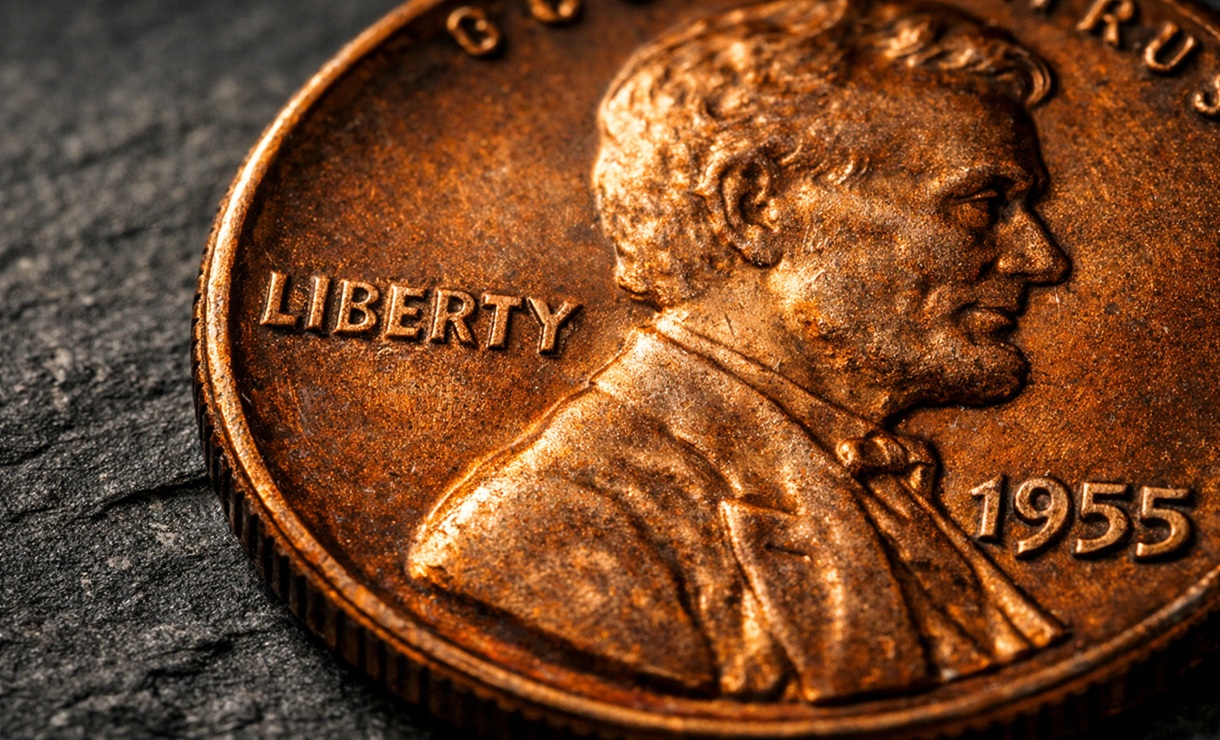
Imagine reaching into your pocket and pulling out a penny worth thousands of dollars. Sounds like a dream, right? For lucky collectors, that dream has come true — all thanks to one of the most famous minting errors in U.S. history: the 1955 Double Die Penny. This tiny coin has captivated treasure hunters and numismatists for decades. Whether you’re a seasoned collector or just someone who found an old penny in a jar, knowing how to identify a 1955 Double Die Penny with your naked eye could change everything. In this guide, we’ll walk you through exactly what to look for, how to tell it apart from ordinary cents, and why this coin continues to make headlines in the coin collecting world.
What Is the 1955 Double Die Penny?
The 1955 Double Die Penny — also called the 1955 DDO (Double Die Obverse) — is a Lincoln wheat cent with a dramatic minting error. During production, the coin’s obverse (front) die was accidentally hubbed twice at slightly different angles, creating a doubled impression on the design.
The result? A coin where the lettering, date, and Lincoln’s portrait appear to be doubled — almost like a ghost image overlapping the original. It’s one of the most visually striking errors ever to leave a U.S. Mint, and it’s incredibly valuable because of it.
Approximately 20,000 to 24,000 of these error coins were struck before the mistake was caught — many ending up in circulation inside cigarette packs as change.
How to Spot the 1955 Double Die Penny With Your Naked Eye
Unlike many coin errors that require magnification to detect, the 1955 Double Die Penny is unique because its doubling is dramatic enough to see without any tools at all. Here’s what to look for:
1. Check the date “1955”
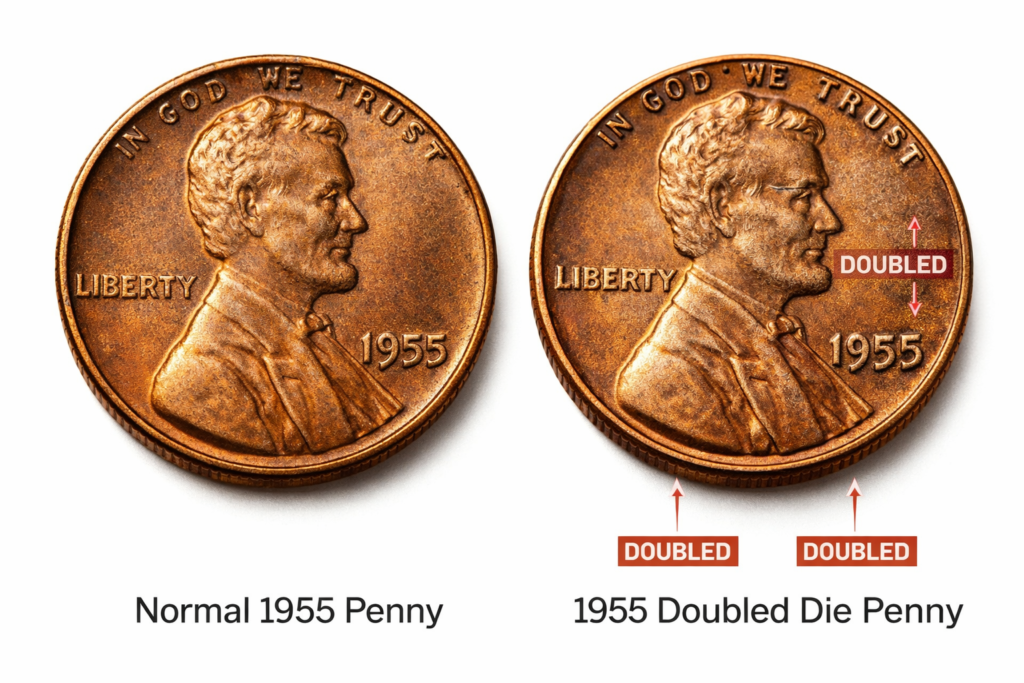
The most obvious clue is the date. On a genuine 1955 DDO, the numbers “1955” show clear, bold doubling. You’ll see two distinct impressions of each digit, offset from each other. This isn’t a slight shimmer — it’s a full, unmistakable shadow copy of the numbers.
2. Examine the motto “LIBERTY”
Look closely at the word LIBERTY on the obverse. On a genuine double die, each letter will appear doubled, almost as if someone typed the word twice and shifted the second layer slightly to the right.
3. Look at “IN GOD WE TRUST”
The motto IN GOD WE TRUST is another key area. On an authentic 1955 DDO, these words are dramatically doubled and easy to read as two separate layers of text without any magnification.
4. Inspect Lincoln’s portrait
While the doubling is most visible in the text, Lincoln’s portrait and ear also show subtle signs of the double impression. Look for a slight ghosting or blurring around the edges of his features.
1955 Double Die Penny vs. Other 1955 Pennies: Key Differences
Not every 1955 cent is a double die. Here’s a quick comparison to help you tell them apart:
- 1955 Regular Issue: Clean, crisp lettering with no doubling. Date is sharp and singular.
- 1955 Double Die (DDO): Strong doubling on date, LIBERTY, and IN GOD WE TRUST. Visible to the naked eye.
- 1955 Poor Man’s Double Die: A machine-doubled coin with minor, flat doubling. Much less dramatic and far less valuable.
- 1955-D and 1955-S: These mint-marked coins from Denver and San Francisco do not have the double die error.
The “Poor Man’s Double Die” is a common lookalike. It lacks the strong, three-dimensional doubled impression of the genuine 1955 DDO — if the doubling looks flat or shelf-like, it’s likely not the real thing.
How Much Is a 1955 Double Die Penny Worth?
The value of a 1955 Double Die Penny depends heavily on its condition (grade). Here’s a general value range:
- Good (G-4): $800 – $1,200
- Fine (F-12): $1,200 – $1,800
- Extremely Fine (EF-40): $2,500 – $4,000
- Uncirculated (MS-63): $10,000 – $20,000+
- Top Grade (MS-65 Red): $50,000+
Even heavily worn examples in poor condition are worth hundreds of dollars — making this one of the most valuable small coins in American numismatics.
Tips for Authenticating Your 1955 DDO
Found what looks like a 1955 Double Die Penny? Here are the next steps to take before celebrating:
- Don’t clean it. Cleaning a coin destroys its value. Leave it exactly as you found it.
- Use a loupe or magnifier. While the doubling is visible to the naked eye, a 5x–10x loupe helps confirm the details.
- Compare to photos. Use trusted numismatic resources or the PCGS CoinFacts website for side-by-side comparisons.
- Get it graded. Submit your coin to a professional grading service like PCGS or NGC. Authentication adds significant credibility and protects its value.
- Watch for counterfeits. Altered dates (from 1958 pennies) exist. A reputable grading service will catch these.
Where Are 1955 Double Die Pennies Found Today?
Most of these coins entered circulation through change at New England vending machines and cigarette dispensers in the mid-1950s. Today, they turn up in old coin jars, estate sales, and inherited collections. Checking every pre-1960 wheat penny you come across is always a good habit.
Coin shows, online auctions (like eBay and Heritage Auctions), and estate sales remain the best hunting grounds for collectors hoping to add a 1955 DDO to their collection.
Conclusion
The 1955 Double Die Penny is one of those rare coins that combines history, drama, and serious monetary value all in one tiny package. The good news is that you don’t need fancy equipment to spot one — the doubling on the date, LIBERTY, and IN GOD WE TRUST is bold enough to see with your own eyes. Whether you’re sorting through grandma’s old coin jar or browsing a flea market, now you know exactly what to look for. Keep your eyes open, handle every old penny with care, and you just might be holding a small fortune in the palm of your hand.
Frequently asked questions
Q1: How many 1955 Double Die Pennies are known to exist?
It’s estimated that between 20,000 and 24,000 were minted before the error was caught. Today, far fewer survive in collectible condition, making them genuinely scarce.
Q2: Can I really see the doubling without a magnifying glass?
Yes! The 1955 DDO has one of the most dramatic doublings of any U.S. coin error. The date and lettering show clear, bold doubling visible to the naked eye in good lighting.
Q3: What’s the difference between a 1955 DDO and a “Poor Man’s Double Die”?
The genuine DDO shows strong, rounded, three-dimensional doubling. The “Poor Man’s” version has flat, shelf-like doubling caused by die deterioration — it’s far less dramatic and worth much less.
Q4: Should I get my 1955 penny graded?
Absolutely, if you believe it’s a DDO. Professional grading by PCGS or NGC authenticates the coin, protects its value, and makes it much easier to sell at full market price.
Q5: Is a worn 1955 Double Die Penny still valuable?
Yes. Even heavily circulated examples in “Good” condition regularly sell for $800–$1,200. The rarity of the coin keeps its floor price high regardless of wear.