What if a single penny sitting in an old coin jar was worth thousands of dollars?
The 1914-D Lincoln penny value is one of the most talked-about topics in American numismatics — and for good reason. This small copper coin, struck over a century ago at the Denver Mint, is one of the most sought-after key dates in the entire Lincoln Wheat cent series.
Whether you’re a seasoned collector or just found an old penny in grandma’s drawer, understanding what the 1914-D is worth could change everything. In this guide, we break down current auction prices, grading factors, how to spot fakes, and exactly what makes this coin so special.
Table of Contents
- Why the 1914-D Lincoln Penny Is So Rare
- 1914-D Lincoln Penny Value by Grade
- How to Grade Your 1914-D Penny
- How to Spot a Fake 1914-D Lincoln Cent
- Recent Auction Results
- Key Takeaways
- FAQs
Why the 1914-D Lincoln Penny Is So Rare
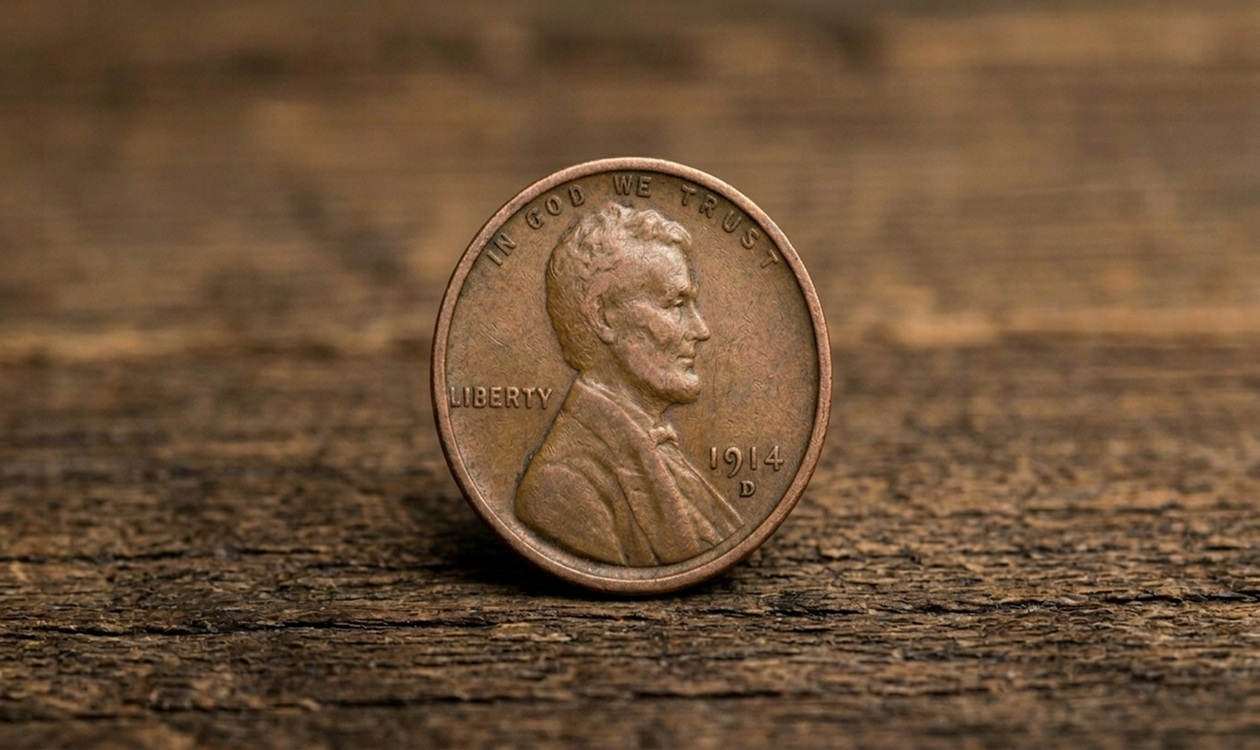
The 1914-D wheat penny was minted at the Denver Mint — identified by the small “D” mintmark below the date on the obverse. However, only 1,193,000 coins were struck that year, making it one of the lowest-mintage Lincoln cents of the early series.
Low mintage alone doesn’t make a coin rare. What truly elevates the 1914-D is survival rate. Most of these pennies circulated heavily through the early 20th century. Coins that survived in good condition are genuinely scarce today.
Therefore, collectors prize high-grade examples above almost any other early Lincoln cent — except perhaps the famous 1909-S VDB.
1914-D Lincoln Penny Value by Grade
Here’s a clear breakdown of what the 1914-D wheat penny is worth across common grades:
| Grade | Estimated Value |
|---|---|
| Good (G-4) | $200 – $300 |
| Very Good (VG-8) | $350 – $500 |
| Fine (F-12) | $500 – $750 |
| Very Fine (VF-20) | $800 – $1,200 |
| Extremely Fine (EF-40) | $1,500 – $2,500 |
| About Uncirculated (AU-50) | $3,000 – $5,000 |
| MS-63 Red Brown | $12,000 – $18,000 |
| MS-65 Red | $40,000 – $80,000+ |
Quick Answer (Featured Snippet): The 1914-D Lincoln penny value ranges from roughly $200 in well-worn condition to over $80,000 in mint state. Its low mintage of just over 1.1 million coins and poor survival rate in high grades make it one of the most valuable wheat pennies a collector can own.
Even in heavily circulated grades, this coin commands serious money. Because of that, it’s worth having any example professionally authenticated.
How to Grade Your 1914-D Penny
Grading determines everything when it comes to Lincoln penny collector value. Here’s what to look for:
Good to Fine (G–F)
- Most detail is worn flat
- Lincoln’s portrait is visible but lacks sharp definition
- Date and mintmark are legible — this matters most
Very Fine to Extremely Fine (VF–EF)
- Moderate to light wear on cheekbone and jawline
- Hair detail above the ear partially visible
- Wheat stalks on reverse show clear separation
About Uncirculated to Mint State (AU–MS)
- Only slight friction on highest points
- Luster visible in fields
- Full red (RD) designation commands the highest premiums
Pro Tip: Always use a 5x–10x loupe to examine the mintmark closely. The “D” should be sharp and naturally integrated — not added later.
PCGS CoinFacts
Because of its high value, the 1914-D is one of the most counterfeited rare Lincoln cents in existence. Two main types of fakes circulate:
1. Altered Date Coins Counterfeiters sometimes alter a 1944-D (a common coin) to look like a 1914-D. The “4” is shaved and reshaped. Under magnification, tooling marks around the date are usually visible.
2. Added Mintmark Coins A genuine 1914 Philadelphia cent (no mintmark) has a “D” soldered or glued on. Look for raised edges around the mintmark or unnatural coloring.
The safest move: Submit your coin to PCGS or NGC for professional grading and authentication before buying or selling.
Recent Auction Results for the 1914-D Penny
The market for this coin remains strong. Here are real-world results that show just how much collectors pay:
- PCGS MS-64 RB — Sold for $19,200 at Heritage Auctions
- NGC MS-63 RD — Realized $16,800 at Stack’s Bowers
- PCGS VF-35 — Sold for $1,320 at a regional auction
- NGC G-6 — Realized $265 in an online sale
These figures confirm that the 1914-D wheat penny worth holds strong even in lower grades. However, condition is the single biggest factor in price.
Why the 1914-D Matters to Coin Collectors
Beyond pure dollar value, the 1914-D Lincoln cent represents a pivotal moment in American coinage history. Victor David Brenner’s Lincoln design had debuted just five years earlier in 1909. By 1914, the series was still young — and the Denver Mint’s low output that year created a coin that would frustrate and excite collectors for generations.
Owning a genuine 1914-D is considered a milestone achievement in completing a Lincoln Wheat cent collection. Many collectors spend years searching before finding an affordable, authentic example.
NGC Coin Explorer
- The 1914-D Lincoln penny had a mintage of just over 1.1 million — extremely low for the series
- Values range from $200 (circulated) to $80,000+ (mint state)
- Fakes are common — always authenticate with PCGS or NGC
- Even worn examples are worth hundreds of dollars
- This coin is considered one of the top 5 key dates in Lincoln cent collecting
Conclusion
The 1914-D Lincoln penny value is no accident — it’s the result of low mintage, heavy circulation losses, and over a century of collector demand. Whether you’ve inherited one, found it at a coin show, or are actively hunting for key dates, this coin deserves serious attention.
If you think you have a genuine 1914-D, don’t guess — get it authenticated. A few hundred dollars in grading fees could reveal a coin worth tens of thousands.
Ready to explore more rare coins? Browse our guides to other key date Lincoln cents and discover what else might be hiding in your collection.
FAQs
Q1: What is a 1914-D Lincoln penny worth today? A 1914-D penny in circulated condition is worth between $200 and $2,500 depending on grade. Uncirculated examples can sell for $10,000 to $80,000 or more. The 1914-D Lincoln penny value depends heavily on condition and color designation.
Q2: How do I know if my 1914-D penny is real? Look for natural mintmark integration and examine the date closely under magnification. Altered 1944-D coins and added mintmark fakes are common. Submit your coin to PCGS or NGC for professional authentication.
Q3: Where is the mintmark on a 1914-D Lincoln cent? The “D” mintmark appears on the obverse (front) of the coin, just below the date on the right side. It indicates the coin was struck at the Denver Mint.
Q4: Is the 1914-D a key date Lincoln cent? Yes. The 1914-D is widely recognized as one of the top key dates in the Lincoln Wheat cent series, along with the 1909-S VDB and 1922 Plain. Its low mintage and scarcity in high grades make it extremely desirable.
Q5: Should I clean my 1914-D penny before selling it? Never clean a rare coin. Cleaning destroys the original surface and dramatically reduces collector value. A naturally toned or even dirty coin is far more valuable than one that has been polished or dipped.
1 thought on “1914-D Lincoln Penny Value: What Collectors Pay for This Rare Date”