What if a minting mistake made your coin worth far more than 25 cents?
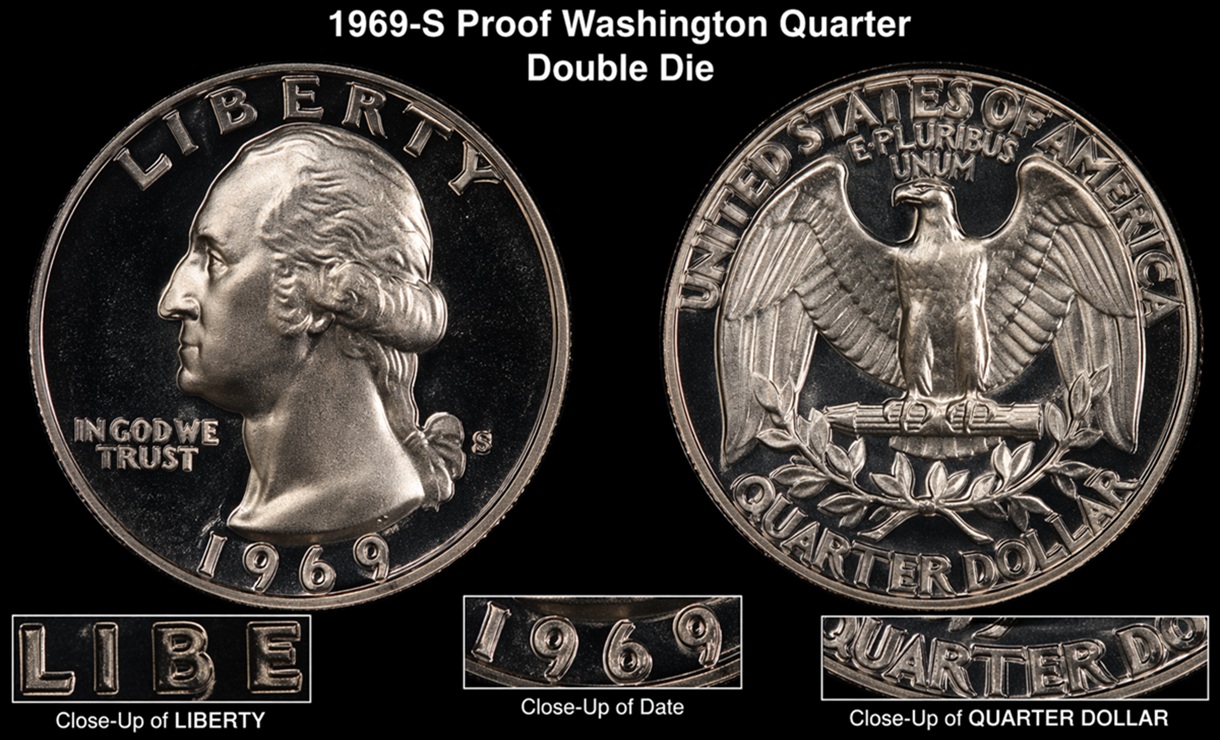
The 1969-S Proof Washington Quarter Double Die is one of those thrilling numismatic discoveries that turns a casual coin into a serious collectible. If you’ve found a 1969-S proof quarter in an old set and noticed something odd about the lettering or date — you may be sitting on a genuine rarity.
In this guide, you’ll learn exactly how to identify this doubled die error, what makes it valuable, and how collectors authenticate it. Whether you’re a seasoned numismatist or a curious beginner, this breakdown will help you know what to look for.
Table of Contents
- What Is the 1969-S Proof Washington Quarter Double Die?
- Why This Coin Matters to Collectors
- How to Identify the Doubled Die Error
- Key Identification Markers at a Glance
- What Is It Worth?
- Where to Buy or Sell This Rare Error Coin
- Key Takeaways
- FAQs
- Conclusion
What Is the 1969-S Proof Washington Quarter Double Die?
A doubled die error occurs during the coin die manufacturing process. When a working die is hubbed (pressed) more than once, and the second impression lands at a slightly different angle, it creates a doubling effect on the design elements.
The 1969-S Proof Washington Quarter was struck at the San Francisco Mint specifically for proof sets. Because proof coins are struck with extra care and polished dies, any doubling is often more visible — and more dramatic — than on a circulation coin.
This particular error affects the obverse (front) of the coin, which is why collectors and dealers often refer to it as a doubled die obverse (DDO).
Why This Coin Matters to Collectors
Proof coins are already special. They’re made with mirror-like fields and frosted devices, intended for collectors — not circulation.
So when a Washington quarter error coin slips through the San Francisco Mint’s quality process, it becomes extremely rare by nature. Very few of these doubled die proof quarters survive in high-grade condition, which pushes demand — and price — upward.
Collectors prize this coin for three key reasons:
- It’s a proof-only issue, with limited mintage
- The doubling is visually dramatic and confirmable
- It fits into a popular collecting series (Washington Quarters)
How to Identify the Doubled Die Error
This is the section that matters most. Here’s how to spot a genuine 1969-S doubled die proof quarter with confidence.
Step 1: Examine the Date and Motto
The most consistent doubling on this variety appears on:
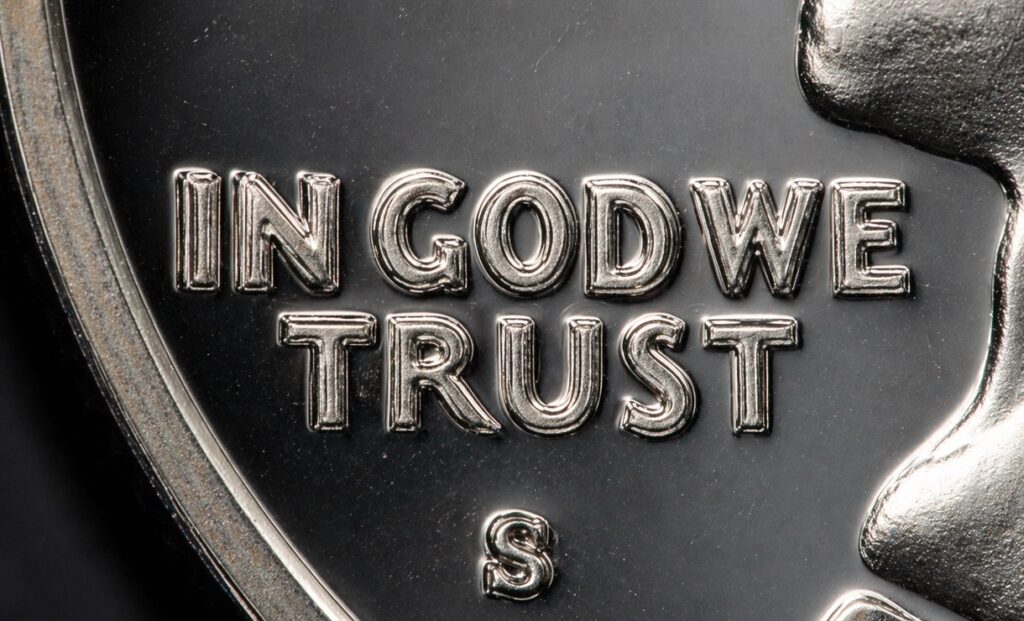
- “IN GOD WE TRUST” — Look for separated, doubled letters, especially on “GOD” and “TRUST”
- The date “1969” — Under magnification, you may see a ghost image slightly offset from the primary digits
Use a 10x loupe or jeweler’s magnifier for this step. A coin microscope is even better.
Step 2: Check George Washington’s Portrait
On confirmed examples, the hair details and ear of Washington show slight but measurable doubling. This is a secondary marker — not always visible to the naked eye — but it supports identification alongside the motto doubling.
Step 3: Confirm the “S” Mintmark
The mintmark “S” should be sharp and clean on a genuine San Francisco proof. If the coin lacks an “S” mintmark, it is not a proof coin — and not this variety. Don’t waste time on unmarked quarters.
Step 4: Rule Out Machine Doubling
This is critical. Machine doubling (MD) is a common fake-out for beginners. Unlike a true doubled die, machine doubling creates a flat, shelf-like appearance on the letters. True DDO doubling shows rounded, fully formed secondary elements — it looks like two complete letters stacked near each other.
If the doubling looks smeared or flat, it’s likely MD — and has little added value.
Step 5: Get a Professional Attribution
For coins you believe are genuine, submit to PCGS or NGC for grading and attribution. A slabbed, attributed 1969-S Proof DDO carries significantly more market trust and resale value.
Key Identification Markers at a Glance
| Feature | What to Look For |
|---|---|
| Motto (“IN GOD WE TRUST”) | Doubled letters, especially “GOD” |
| Date (1969) | Slight offset ghost of digits |
| Washington’s Hair/Ear | Secondary detail doubling |
| Mintmark | Must be “S” (San Francisco proof) |
| Fields | Mirror-like proof surface (not matte) |
| Doubling Type | Rounded secondary elements (not flat MD) |
What Is It Worth?
Value depends heavily on grade and eye appeal.
- Ungraded / raw examples with visible doubling: $50–$200+
- PCGS/NGC PR65–PR67 attributed examples: $300–$1,000+
- Cameo or Deep Cameo (DCAM) in top grades: potentially $1,500 or more
Because this is a proof-only error, population reports from PCGS and NGC are thin — meaning few examples have been certified. Scarcity fuels premiums in this coin category.
For context, other transitional and error coins from this era — like the 1965 Silver Quarter transitional error — follow a similar pattern of rarity driving collector demand.
Where to Buy or Sell This Rare Error Coin
- PCGS CoinFacts and NGC Coin Explorer — Research population and recent auction prices
- Heritage Auctions / Stack’s Bowers — Best platforms for high-grade certified examples
- eBay (with caution) — Always buy slabbed coins from verified sellers
- Local coin shows — Sometimes the best deals hide in dealer boxes
If you’re selling, have the coin attributed first. An unattributed DDO sells for a fraction of its certified value.
Key Takeaways
- The 1969-S Proof Washington Quarter Double Die is a rare proof error coin
- Doubling appears most clearly on “IN GOD WE TRUST” and the date
- Always distinguish true DDO from worthless machine doubling
- Certified examples in high grades can sell for $300–$1,500+
- San Francisco “S” mintmark is required — no S = not this coin
- Submit to PCGS or NGC for proper attribution before selling
Conclusion
The 1969-S Proof Washington Quarter Double Die is a genuinely exciting find for any coin enthusiast. It combines the prestige of a proof issue with the thrill of a manufacturing error — and that combination is exactly what drives collector demand.
The key is knowing what to look for: doubled lettering on the motto, offset digit ghosting on the date, and a clean San Francisco “S” mintmark. Equally important is knowing what not to mistake it for — machine doubling is the number one trap.
If you think you’ve found one, don’t guess — get it certified. A professional attribution from PCGS or NGC turns a suspicion into a documented, sellable rarity.
Ready to explore more rare coin discoveries? Browse our guides on other valuable U.S. error coins and proof rarities — your next find might already be in your collection.
FAQs
Q1: How rare is the 1969-S Proof Washington Quarter Double Die? It’s considered scarce within the proof series. Because proof sets were collected — not circulated — many survive, but confirmed DDO examples with strong doubling are far less common. Population reports at PCGS and NGC show limited certified examples.
Q2: Can I identify the doubled die without a magnifier? Strong examples may show visible doubling to the naked eye, particularly on “IN GOD WE TRUST.” However, a 10x loupe is strongly recommended to confirm doubling and rule out machine doubling before drawing conclusions.
Q3: What’s the difference between a doubled die and machine doubling? A doubled die shows fully formed, rounded secondary design elements created during die production. Machine doubling produces flat, shelf-like smearing caused by die movement during striking. Machine doubling adds little to no value.
Q4: Should I clean the coin before getting it graded? Never clean a coin before grading. Cleaning destroys the original surface, drastically reduces grade, and can result in a “details” designation from PCGS or NGC — significantly lowering value.
Q5: Are there other doubled die Washington quarters I should know about? Yes. The Washington quarter series has several notable doubled die varieties across multiple years and mintmarks. Collectors who enjoy this type of error also often pursue the 1934 DDO and various Business Strike DDO quarters from the 1970s–1980s.