
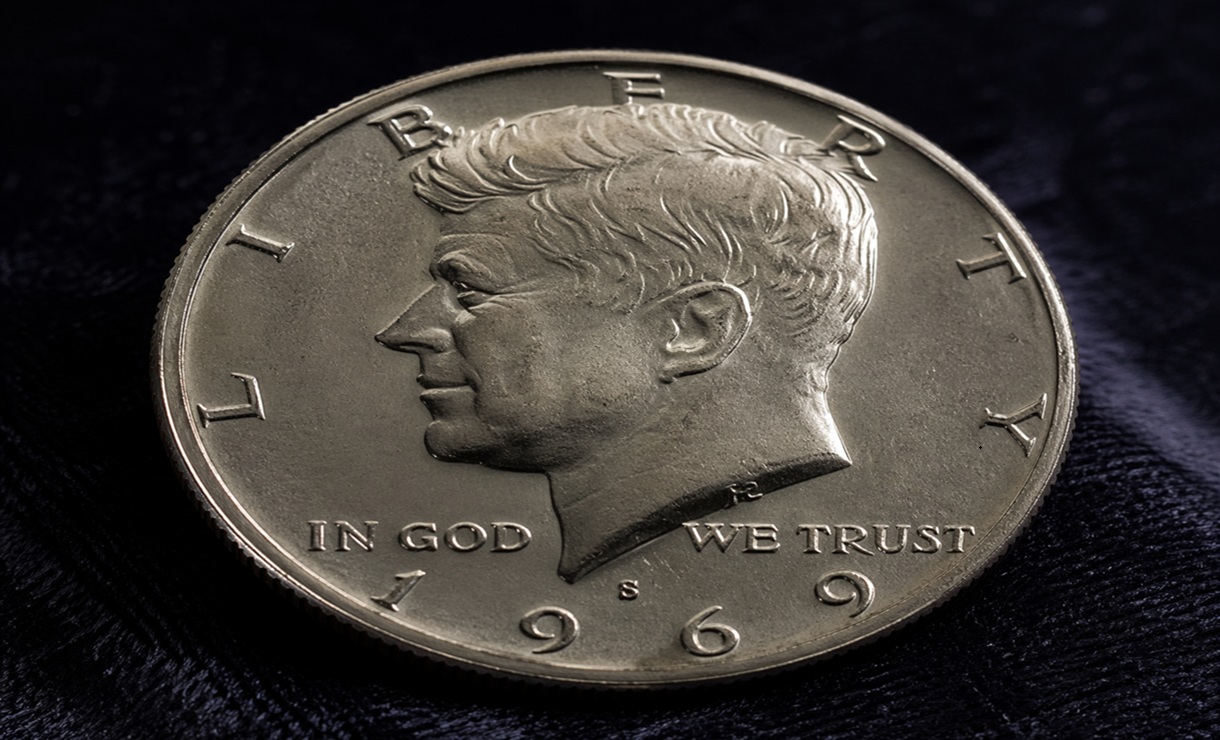
Introduction: A Small Mistake Worth a Fortune
What if a coin sitting in an old drawer could be worth $10,000 or more? That’s exactly the reality for collectors lucky enough to own the 1969-S Kennedy Half Dollar Double Die. This rare mint error is one of the most coveted finds in American numismatics — and most people have never even heard of it.
The 1969-S proof half dollar was struck at the San Francisco Mint, intended as a collectible coin for proof sets. But a small number of these coins were struck with a doubled die obverse error — a minting mistake that doubled the appearance of key design elements. That tiny flaw transformed an ordinary coin into a numismatic treasure.
If you’re a coin collector or just someone who inherited an old collection, this guide will show you exactly how to identify this coin and what it could be worth.
What Is a Double Die Error?
The Minting Process Explained
To understand the 1969-S Kennedy Half Dollar Double Die, you need to understand how coins are made. The U.S. Mint creates coins using hardened steel dies. Each die is impressed multiple times with a hub — the master design tool — to create a deep, detailed working die.
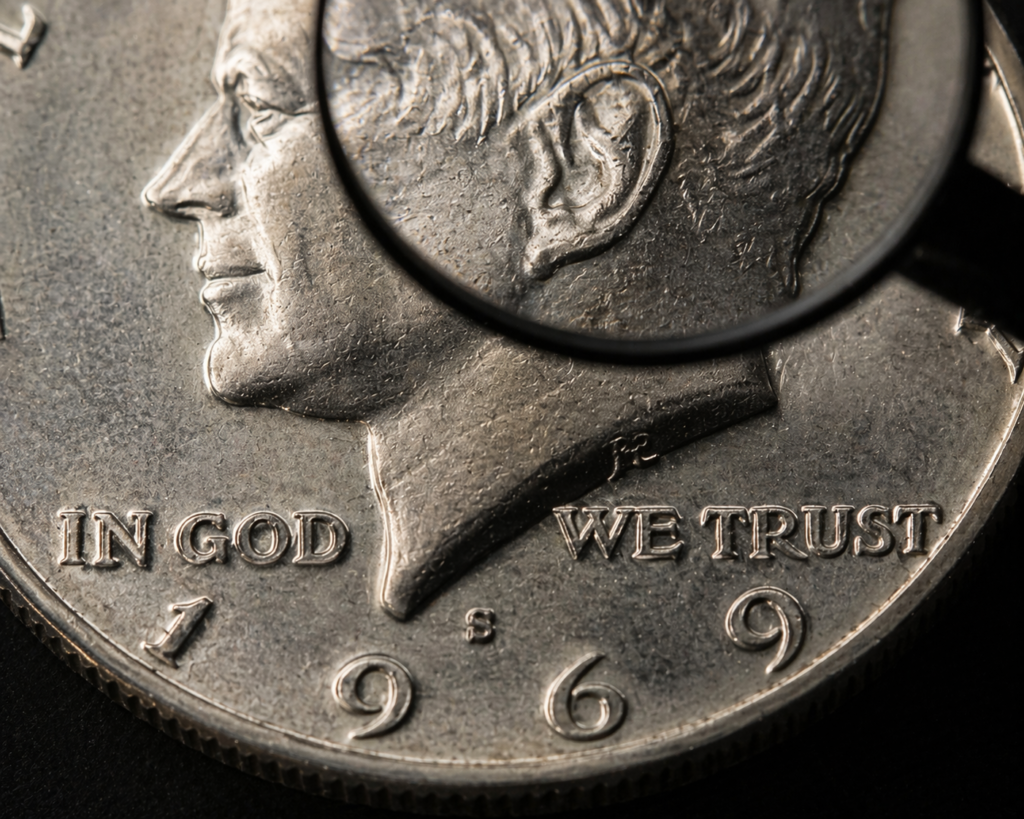
If the die shifts slightly between hub impressions, the design elements become doubled. The result is a coin where letters, numbers, or portrait features appear to have a shadow or ghost image alongside them.
Why This Error Slipped Through
In 1969, quality control at the San Francisco Mint allowed a small number of doubled die proof coins to enter proof sets sold to collectors. Because these were sealed in plastic cases, many survived in excellent condition. That survival rate — combined with the coin’s rarity — is exactly why the 1969-S Kennedy Half Dollar Double Die commands such high prices today.
How to Identify the 1969-S Kennedy Half Dollar Double Die
Key Identifying Features
Spotting a genuine doubled die requires patience and the right tools. Here’s what to look for:
- “LIBERTY” inscription: The letters should show clear doubling, appearing slightly blurred or shadowed
- “IN GOD WE TRUST”: One of the most obvious areas — look for doubled letters, especially on the “G” and “D”
- Date — “1969”: The numerals may appear doubled, particularly the “9” digits
- Kennedy’s portrait: The eyelid, hair details, and jawline may show subtle doubling
- “E PLURIBUS UNUM”: Check for doubling on the reverse motto as well
Tools You’ll Need
You don’t need expensive equipment to start your search. A basic coin examination kit includes:
- A 10x loupe or magnifying glass — the most important tool
- A 30x jeweler’s loupe for confirming doubling
- Good direct lighting (an LED desk lamp works well)
- Cotton gloves to avoid fingerprints and oil damage
- A coin album or soft pad to rest the coin on safely
What to Look For Under Magnification
When you examine the coin under magnification, genuine doubling appears as a distinct, separate impression of the design element — not a blur. Machine doubling (a common fake-out) looks smeared or shelf-like, with no real depth. True hub doubling has separation, clarity, and follows the natural curve of the letters or features.
1969-S Kennedy Half Dollar Value: What Is It Worth?
Value by Grade
The 1969-S Kennedy Half Dollar Double Die value depends heavily on its condition and grade:
| Grade | Estimated Value |
|---|---|
| PR-60 (Proof, circulated) | $1,500 – $2,500 |
| PR-64 (Proof, slight marks) | $3,000 – $5,000 |
| PR-65 (Gem Proof) | $5,000 – $7,500 |
| PR-66 or higher | $8,000 – $12,000+ |
Record Sales
Top-graded examples of this coin have sold at major auction houses for over $10,000. A PR-67 Deep Cameo specimen — the pinnacle of proof coinage quality — has fetched prices exceeding $12,000 in recent years.
Why Condition Matters So Much
Because this coin was issued as a proof, it was struck with polished dies on specially prepared planchets. Even minor hairlines or contact marks can dramatically reduce its value. Coins that remained sealed in original proof sets command a significant premium.
How to Get Your Coin Authenticated and Graded
Why Professional Grading Is Essential
If you believe you’ve found a 1969-S Kennedy Half Dollar doubled die, do not attempt to clean it. Cleaning destroys value instantly. Instead, submit it to a professional third-party grading service.
The two most trusted grading services are:
- PCGS (Professional Coin Grading Service) — widely considered the gold standard
- NGC (Numismatic Guaranty Corporation) — equally respected in the hobby
Both services will authenticate the doubling, assign a grade, and encapsulate the coin in a tamper-evident holder with a label confirming its variety designation.
What the Grading Process Costs
Grading fees vary depending on the service tier you choose, but expect to pay anywhere from $30 to $100+ per coin. Given that a genuine example could be worth thousands, the investment is well worth it.
Where to Buy and Sell the 1969-S Kennedy Half Dollar Double Die
Trusted Marketplaces
If you’re looking to buy or sell this coin, stick to reputable platforms:
- Heritage Auctions — the world’s largest numismatic auction house
- Stack’s Bowers Galleries — another premier coin auction venue
- eBay — viable but requires caution; only buy certified (PCGS/NGC) examples
- PCGS CoinFacts Marketplace — a trusted dealer network
Tips for Sellers
- Always have the coin graded before listing
- Use high-resolution photographs showing both sides
- Reference the official PCGS or NGC designation in your listing
- Set a realistic reserve price based on recent comparable sales
Common Fakes and Mistakes to Avoid
Beware of Machine Doubling
The most common mistake new collectors make is confusing machine doubling with true hub doubling. Machine doubling creates a flat, shelf-like smear with no real depth. True doubled die errors show distinct, separated impressions with full design detail in both images.
Altered Coins
Some sellers attempt to pass off altered dates or artificially enhanced coins as genuine errors. A certified coin from PCGS or NGC eliminates this risk entirely. Never purchase an uncertified example for significant money.
Conclusion: Could You Be Holding $10,000?
The 1969-S Kennedy Half Dollar Double Die is proof that mint errors aren’t just mistakes — they’re history frozen in metal. With the right tools, a trained eye, and a bit of luck, this coin could be hiding in an old proof set or coin collection near you.
Whether you’re an experienced numismatist or a curious beginner, knowing how to identify this rare variety is an invaluable skill. Take your time, use proper magnification, and always get a potentially valuable coin professionally authenticated before making any decisions.
The $10,000 coin is out there. Now you know exactly what to look for.
Frequently Asked Questions (FAQs)
How many 1969-S Kennedy Half Dollar Double Die coins exist?
The exact mintage of this error is unknown, but it is considered very rare. Only a small number have been certified by PCGS and NGC combined, making it a genuine numismatic rarity.
Can I find this coin in circulation?
It’s extremely unlikely. The 1969-S was a proof coin issued in sealed sets, not for circulation. Most surviving examples have been in collector hands for decades.
What’s the difference between a doubled die and a repunched date?
A doubled die affects the entire hub impression, showing doubling across multiple design elements. A repunched date only affects the date numerals, caused by the date being punched into the die more than once at slightly different positions.
Does cleaning a coin improve its value?
No — quite the opposite. Cleaning removes the coin’s natural surface and luster, dramatically reducing its grade and value. Never clean a potentially rare coin.
How do I submit my coin to PCGS or NGC?
Both services accept submissions through their websites. You can also submit through an authorized dealer. Create an account, select your service level, package the coin securely per their instructions, and ship it to their grading facility.
1 thought on “1969-S Kennedy Half Dollar Double Die: How to Spot This $10,000 Coin”