That coin sitting in your change jar could be worth far more than its face value. Every year, people spend rare coins without knowing it.
Here is the good news. You don’t need a lab or expensive tools. This guide shows you how to identify a rare euro coin at home using simple checks and a little patience.
Before you start, remember that most euro coins are common. However, a small number are scarce, flawed or issued in tiny quantities. Those are the ones collectors chase.
Table of Contents
- Why It Matters
- What You Need
- Step-by-Step Identification
- Rare Types to Look For
- How to Estimate Value
- Key Takeaways
- FAQs
- Conclusion
Why It Matters
Rare coins can be worth tens or even hundreds of euros. Some sell for much more. Because of this, a quick check before spending a coin is worth your time.
Moreover, collecting is growing fast. Many people now search their pockets for hidden treasure. It costs nothing to join them.
What You Need to Get Started
You only need a few simple items:
- A magnifying glass (10x works well)
- A digital scale accurate to 0.01 grams
- A soft cloth and cotton gloves
- A bright desk lamp
- A coin catalogue or trusted online reference
Never clean your coins. Cleaning removes natural surface detail and can destroy collector value. A gentle brush for loose dust is enough.
Step-by-Step: How to Identify a Rare Euro Coin at Home
Step 1: Check the Country and Year
Euro coins carry a national side. This shows which country issued the coin. Some issuers make very few coins each year.
Coins from Monaco, the Vatican, San Marino and Andorra are often scarce. Because these states are tiny, their mintages are low. Therefore, collectors pay more for them.
Step 2: Look for the Mint Mark
A mint mark shows where the coin was made. Germany is a good example. German euro coins carry letters such as A, D, F, G or J.
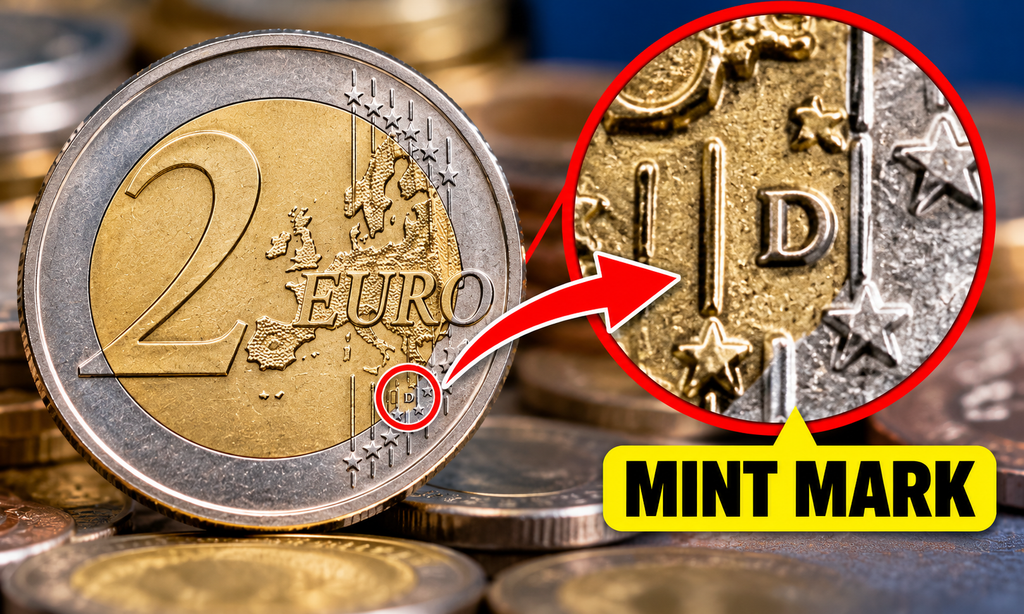
Some mints produced fewer coins in certain years. As a result, certain letter and year pairs are harder to find. Use your magnifying glass to find the mark near the design.
Step 3: Spot Commemorative Designs
Many 2 euro coins celebrate events or anniversaries. These differ from the standard national design. Because they circulate less widely, they often attract collectors.
Compare your coin with an official list of designs. The European Central Bank publishes a helpful overview of euro coins and their designs.
Step 4: Weigh the Coin
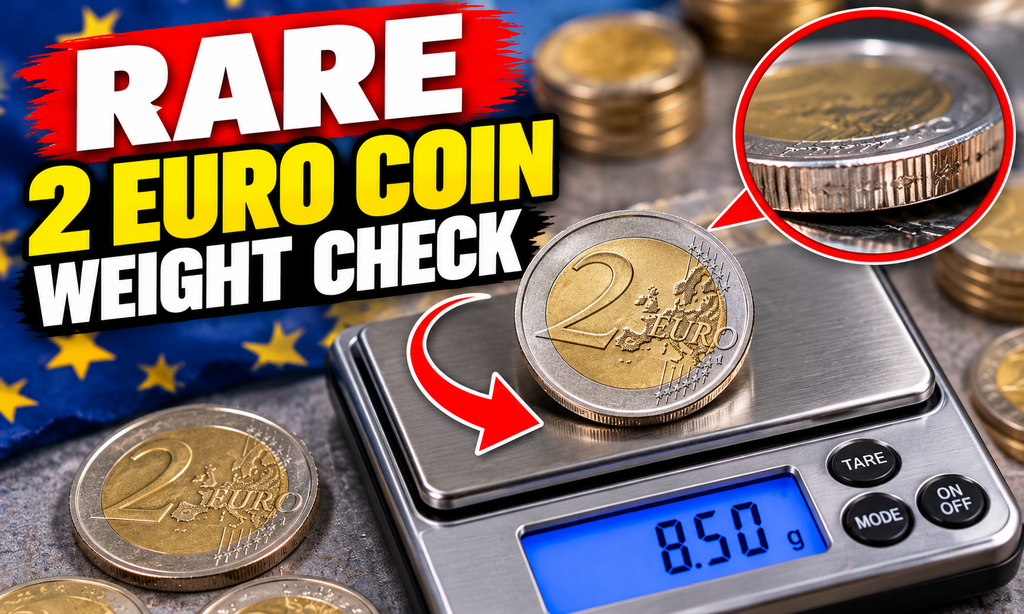
Every euro coin has an official weight. For example, a 2 euro coin should weigh about 8.5 grams. A 1 euro coin weighs about 7.5 grams.
If your coin is noticeably off, it may be an error. However, remember that wear and damage also change weight. Weigh several coins for comparison.
Step 5: Inspect the Edge
The edge is easy to overlook. Yet 2 euro coins carry edge lettering or patterns that differ by country. A wrong or missing edge design can signal a minting error.
Rotate the coin slowly under your lamp. Look for doubled letters, odd spacing or a plain edge where text should be.
Step 6: Look for Errors
Errors are among the most exciting finds. Examples include off-centre strikes, doubled details and wrong-metal planchets.
Next, check for:
- Misaligned inner and outer rings on bimetallic coins
- Missing design parts
- Strange colours or surface patches
Errors should be clear and repeatable. Scratches and damage do not count.
Step 7: Judge the Condition
Condition affects price strongly. A bright, sharp coin with no wear is worth far more than a scratched one.
In short, look at the surface, the details and the shine. Coins that look almost new are the best candidates for a high value.
Rare Types Worth Knowing
Learning the main groups will speed up your search. Here are the most popular ones:
- Low-mintage national coins: Small states often produce limited runs.
- Commemorative 2 euro coins: Special themes attract steady demand.
- Error coins: Mistakes make each piece one of a kind.
- First-year issues: Early coins from a new euro country can be popular.
- Proof and special sets: These are made for collectors and are often kept sealed.
If you want to see which coins top the market, read our guide to the most valuable 2 euro coins ranked. It shows real examples and typical prices.
Why It Matters: Quick Insights
- Rarity depends on mintage, not age alone.
- Many valuable coins are still in circulation.
- A single mint mark can change a coin’s price.
- Condition often matters more than the date.
How to Estimate Value at Home
Once you identify a rare euro coin, you need a price guide. Start by searching recent sold listings on trusted auction sites. Asking prices can be misleading, so focus on completed sales.
Then compare your coin’s grade with similar examples. Be honest about wear. Buyers will be.
If the coin looks very valuable, consider a professional grading service. Experts can confirm authenticity and condition. Furthermore, a graded coin is easier to sell.
Euro collecting follows the same logic as other markets. For comparison, see how condition and mint marks drive prices in our article on the 1932-D Washington quarter value. You can also read about the 1943 copper penny value to see how a single error can create a legend.
For general background on the currency itself, the Wikipedia page on euro coins offers a clear overview.
Common Mistakes to Avoid
Many beginners make the same errors. Avoid these:
- Cleaning coins with polish or acid
- Handling coins with bare fingers
- Trusting a single online price
- Ignoring fake coins and altered pieces
- Selling too quickly without research
Counterfeits exist, especially for popular 2 euro coins. Always check weight, size and edge details. Also, buy from reputable sellers.
Key Takeaways
- Start with the country, year and mint mark.
- Weigh the coin and inspect the edge.
- Look closely for errors and unusual features.
- Never clean your coins.
- Check sold prices before you decide on a value.
- Use trusted references to confirm designs.
FAQs
1. How do I know if my euro coin is rare?
Check the issuing country, year and mint mark. Low-mintage issues and clear errors are the best signs. Compare your coin with an official catalogue.
2. Which euro coins are the most valuable?
Coins from small states like Monaco, the Vatican and San Marino often sell high. Certain commemorative 2 euro coins also rank well.
3. Can I identify a rare euro coin at home without tools?
Yes, you can start with your eyes and a simple lamp. A magnifying glass and scale make the process much more accurate.
4. Should I clean an old euro coin?
No. Cleaning removes natural surface detail and lowers value. A soft brush for dust is the safest option.
5. Where can I sell a rare euro coin?
You can use coin dealers, auction sites or collector forums. Compare several offers and check seller reviews first.
Conclusion
Now you know how to identify a rare euro coin at home. Check the country, year, mint mark, weight, edge, errors and condition. Each step narrows the search and protects you from missing a hidden gem.
Don’t wait. Grab your coin jar tonight, follow these seven steps and see what you find. Found something interesting? Leave a comment below and share your discovery with our community.