
You reach into a jar of old pennies and notice one that looks… silver. Not copper. Not dull brown. Silver.
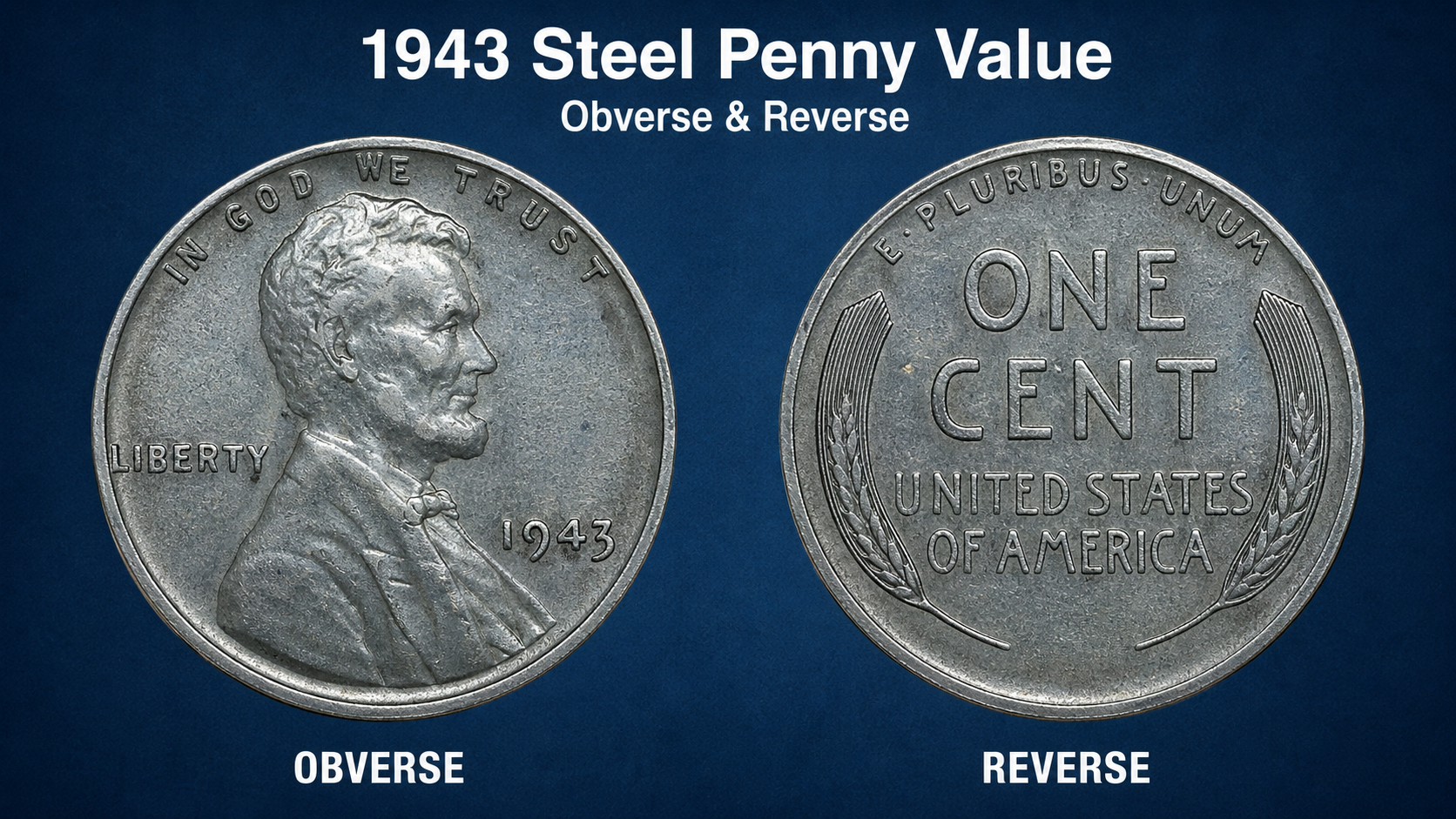
That odd little coin could be a 1943 steel penny — one of the most talked-about wartime coins in American history. And depending on its condition and mint mark, it might be worth far more than one cent.
The 1943 steel penny value has fascinated collectors for decades. Some sell for a few dollars. Others have fetched tens of thousands. So what makes yours special — and how do you find out?
Let’s break it all down.
Table of Contents
- Why the U.S. Minted Steel Pennies in 1943
- 1943 Steel Penny Value: What’s It Worth?
- Mint Marks and How They Affect Value
- The Rare 1943 Copper Penny — Worth a Fortune
- How to Identify a 1943 Steel Penny
- Key Takeaways
- FAQs
- Conclusion
Why the U.S. Minted Steel Pennies in 1943
World War II changed everything — including your pocket change.
In 1942, the U.S. government realized it needed copper for ammunition, electrical wiring, and military equipment. So the U.S. Mint made a bold decision: replace copper pennies with steel cents coated in zinc.
Over 1 billion steel pennies were struck across three mints in 1943 — Philadelphia, Denver, and San Francisco. It was a one-year experiment. By 1944, the Mint returned to using copper (actually recycled shell casings).
These coins were never meant to be collectibles. Yet today, the 1943 wartime cent is one of the most sought-after coins among American collectors.
1943 Steel Penny Value: What’s It Worth?
Here’s the quick answer:
A typical circulated 1943 steel penny is worth between $0.10 and $1.50. In uncirculated (MS) condition, values range from $5 to $50+. The rarest error varieties — especially the 1943 copper penny — can sell for $100,000 to over $1 million.
Now, let’s get into the details.
Circulated 1943 Steel Penny Value
Most 1943 steel pennies you’ll find in the wild are well-worn. They circulated heavily and often show rust or pitting (zinc coating breaks down over time).
| Grade | Estimated Value |
|---|---|
| Good (G-4) | $0.10 – $0.25 |
| Fine (F-12) | $0.25 – $0.50 |
| Extremely Fine (EF-40) | $0.75 – $1.50 |
Uncirculated 1943 Steel Penny Value
Coins that never saw circulation command a serious premium.
| Grade | Estimated Value |
|---|---|
| MS-60 | $5 – $10 |
| MS-63 | $15 – $25 |
| MS-65 | $30 – $60 |
| MS-67+ | $200 – $500+ |
Mint Marks and How They Affect 1943 Steel Penny Value
Three mints produced steel pennies in 1943. Each has a different mintage — and therefore a different rare 1943 penny price in top grades.
Philadelphia (No Mint Mark)
- Mintage: ~684 million
- Most common variety
- Still worth collecting in high grades
Denver (D Mint Mark)
- Mintage: ~218 million
- Slightly scarcer, commands modest premium
- Look for the “D” below the date on the obverse
San Francisco (S Mint Mark)
- Mintage: ~191 million
- Scarcest of the three regular issues
- In MS-65 or higher, can bring $50–$150+
The Rare 1943 Copper Penny — Worth a Fortune
Here’s where things get truly exciting.
A small number of 1943 pennies were accidentally struck on copper planchets left over from 1942 production. These are not steel. They are not zinc-coated. They are genuine copper — and they are extremely rare.
The 1943 copper penny value is staggering:
- Known specimens: approximately 20–40 in existence
- Auction record: over $1.7 million for a top-grade example
- Even lower-grade copper 1943 pennies sell for $100,000 or more
How to Tell If You Have a 1943 Copper Penny
This is critical. Many people mistake a plated or altered coin for the real thing.
- Magnet test: Steel pennies stick to a magnet. A genuine copper penny will NOT.
- Weight test: Copper weighs ~3.11g; steel weighs ~2.7g.
- Color: Real copper 1943 cents show a brown or reddish-brown tone, never silver.
- Professional authentication: Always get it certified by PCGS or NGC before making claims or selling.
How to Identify a 1943 Steel Penny
Knowing how to identify a 1943 steel penny correctly helps you avoid fakes and spot true value.
Key features to check:
- Date: Clearly reads “1943”
- Composition: Silver-gray appearance (zinc-coated steel)
- Magnet test: Should stick firmly to a magnet
- Mint mark: Check just below the date — D (Denver), S (San Francisco), or blank (Philadelphia)
- Condition: Look for rust spots, which reduce value significantly
- Errors: Double dies, off-center strikes, and wrong-planchet errors all increase value
Key Takeaways
- The 1943 steel penny was minted to conserve copper during WWII.
- Most are worth $0.10–$1.50 in circulated condition; uncirculated examples bring more.
- The San Francisco “S” mint mark is the scarcest of the regular issues.
- The 1943 copper penny error is worth $100,000 to over $1 million.
- Use a magnet and a scale to test your coin before getting excited.
- Always get rare finds authenticated by PCGS or NGC.
The 1943 steel penny is more than a quirky wartime relic — it’s a window into a pivotal moment in American history, and for some lucky collectors, a genuine treasure.
Whether yours is a common circulated example worth a dollar or a rare copper mistake worth a million, knowing the 1943 steel penny value is the first step to understanding what you have.
Ready to find out if your coin is the real deal? Have it examined by a certified numismatist or submit it to PCGS or NGC for professional grading. The answer might surprise you.
Browse more rare coin guides on our site — your next big find could already be in your collection.
FAQs
1. How much is a 1943 steel penny worth today?
A typical circulated 1943 steel penny is worth $0.10 to $1.50. In uncirculated condition, values range from $5 to $50 or more. Special error coins and the ultra-rare copper version can be worth thousands to millions.
2. What makes the 1943 copper penny so valuable?
Only around 20–40 genuine 1943 copper pennies are known to exist. They were accidentally struck on leftover copper planchets. Because of their extreme rarity, they’ve sold at auction for up to $1.7 million.
3. How do I know if my 1943 penny is steel or copper?
Use a magnet. A steel penny will stick to it; a copper one will not. You can also weigh the coin — copper weighs about 3.11g, steel about 2.7g. For certainty, have it professionally graded.
4. Does mint mark affect the 1943 steel penny value?
Yes. The San Francisco “S” mint mark is the scarcest, followed by Denver “D.” Philadelphia (no mark) is most common. In high grades, the “S” mint mark can double or triple the value.
5. Are there other 1943 steel penny errors worth money?
Yes. Look for double die obverse errors, off-center strikes, and coins struck on wrong planchets. These 1943 steel penny errors can fetch $50 to several hundred dollars depending on severity and grade.