
What if a 25-cent coin in your pocket was secretly worth $200 or more?
The 2004 Wisconsin State Quarter extra leaf error is one of the most exciting mint mistakes ever released into general circulation — and thousands of them are still out there, hiding in change jars, piggy banks, and coat pockets across the country.
This isn’t a rare find locked away in a museum. Real people have pulled these error quarters from everyday transactions. The question is: do you know what to look for?
In this guide, you’ll learn exactly how to identify the Wisconsin quarter error, understand why it happened, and discover what your coin could be worth today.
Table of Contents
- What Is the 2004 Wisconsin State Quarter Extra Leaf Error?
- How Did This Mint Error Happen?
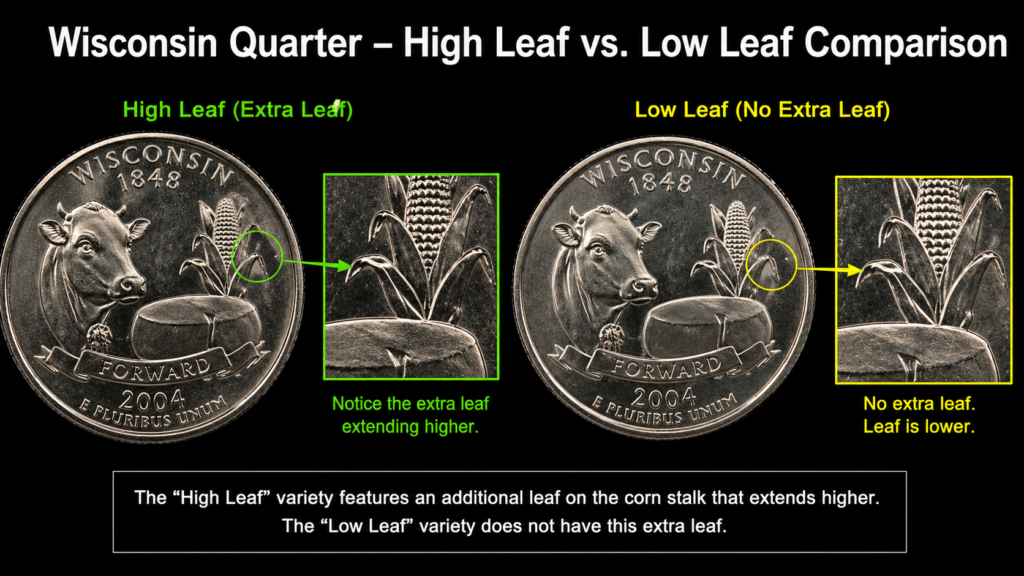
- Low Leaf vs. High Leaf: What’s the Difference?
- How to Find One in Circulation
- What Is the Extra Leaf Quarter Worth?
- Key Takeaways
- FAQs
What Is the 2004 Wisconsin State Quarter Extra Leaf Error?
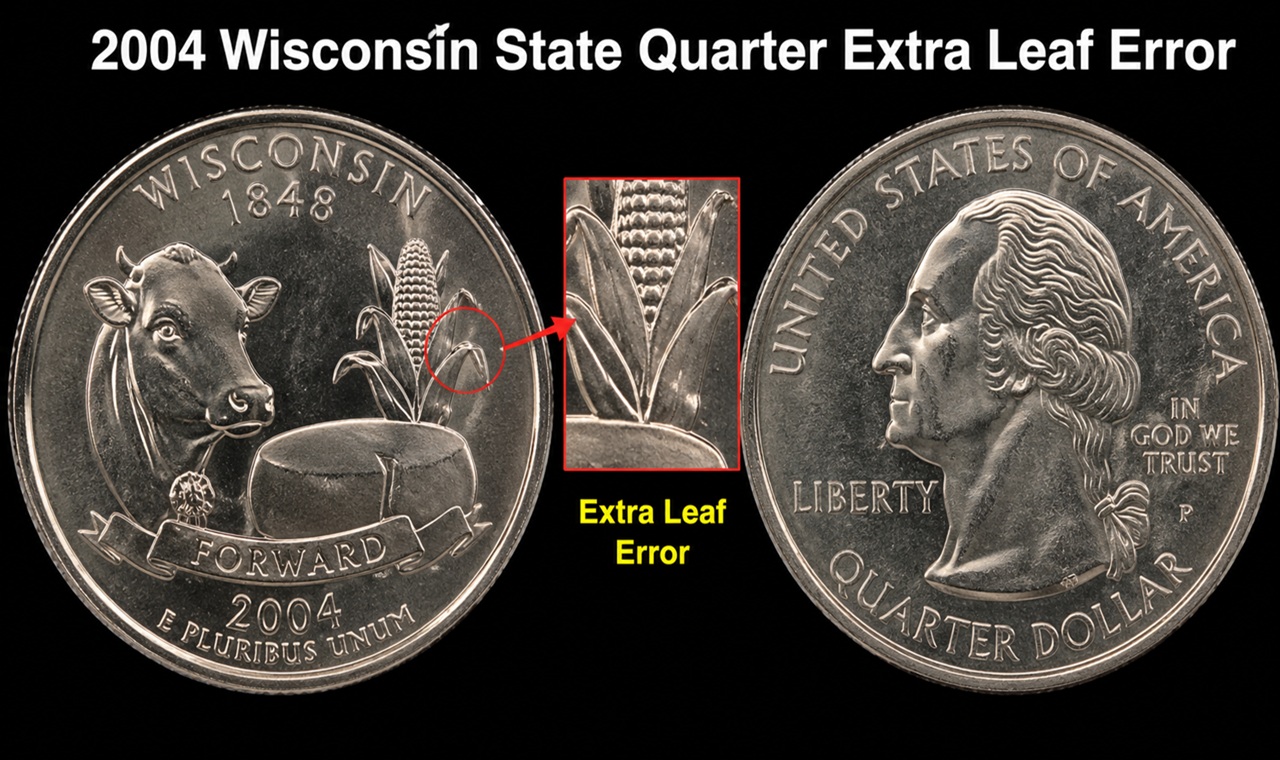
The 2004 Wisconsin State Quarter was part of the U.S. Mint’s popular 50 State Quarters Program. The reverse design features a cow, a wheel of cheese, and an ear of corn — a tribute to Wisconsin’s agricultural heritage.
However, some quarters from the Denver Mint came out with an unexpected addition: an extra leaf on the corn stalk. This tiny, mysterious detail turned an ordinary quarter into one of the most talked-about error coins of the 2000s.
There are two known varieties:
- Extra Leaf High (ELH) — The additional leaf curves upward on the left side of the corn husk.
- Extra Leaf Low (ELL) — The additional leaf points downward along the lower portion of the husk.
Both varieties are legitimate errors, and both carry significant collector value.
How Did This Mint Error Happen?
The origin of this error is still debated among numismatists. The most widely accepted theory is that a Mint employee deliberately modified a die — essentially hand-tooling an extra leaf into the design before coins were struck.
Others suggest it was an accidental die gouge that created the leaf-like appearance. Either way, the U.S. Mint confirmed the error and the coins were never officially recalled.
Because millions of quarters enter circulation every year, a notable number of these error coins left the Denver Mint before anyone caught on. That’s good news for anyone searching through change today.
Low Leaf vs. High Leaf: What’s the Difference?
Knowing which variety you have matters — because values can differ.
Extra Leaf High (ELH):
- The extra leaf appears near the top-left of the corn husk
- It has a slight upward curve
- Generally considered slightly more dramatic in appearance
Extra Leaf Low (ELL):
- The extra leaf sits lower on the husk
- It points downward toward the cheese wheel
- Both varieties are equally sought after by collectors
Use a 10x magnifier or loupe when examining your coin. The extra leaf is subtle but unmistakable once you know where to look — it simply shouldn’t be there on a normal Wisconsin quarter.
How to Find One in Circulation
Here’s the exciting part: you don’t need to visit a coin show to find one. These quarters are still turning up in everyday change.
Where to look:
- Coin rolls from your bank (ask for $10 rolls of quarters)
- Old change jars or piggy banks at home
- Flea markets and estate sales
- Coin-operated laundry machines (check the coin returns)
- Friends and family who save old coins
Step-by-step identification process:
- Look for the “D” mint mark on the obverse (front). Only Denver Mint coins have this error.
- Flip to the reverse and locate the ear of corn on the left side of the design.
- Examine the lower-left area of the corn husk carefully.
- Look for an additional diagonal leaf that doesn’t match the normal design.
- Compare it against a regular 2004 Wisconsin quarter if possible.
A normal Wisconsin quarter has a clean, simple corn husk. If yours has an extra leaf jutting out — you may have found something special.
What Is the Extra Leaf Quarter Worth?
Value depends on condition and variety, but here’s a general breakdown:
| Variety | Circulated Value | Uncirculated (MS) Value |
|---|---|---|
| Extra Leaf High | $100–$300 | $300–$600+ |
| Extra Leaf Low | $100–$250 | $250–$500+ |
| Normal Wisconsin Quarter | $0.25–$1 | $1–$5 |
Coins graded by PCGS or NGC in MS-65 or higher can command even more at auction. The key is preservation — avoid cleaning your coin, as that dramatically reduces collector value.
For current auction results, checking PCGS CoinFacts or NGC’s price guide gives you the most up-to-date market data.
Key Takeaways
- The 2004 Wisconsin State Quarter extra leaf error was struck at the Denver Mint
- Two varieties exist: Extra Leaf High and Extra Leaf Low
- Circulated examples can be worth $100–$300; uncirculated coins fetch more
- Look for the “D” mint mark and examine the corn husk carefully
- These coins are still findable in everyday circulation today
Conclusion
The 2004 Wisconsin State Quarter extra leaf error is proof that extraordinary things can hide in ordinary places. Whether you’re a seasoned collector or someone who just started paying attention to your change, this is one error coin worth hunting for.
Check your coin jars. Order a few rolls from the bank. Grab a magnifying glass. The next quarter you hold could be worth a few hundred dollars — you just have to know what you’re looking at.
Start your search today, and share this guide with a fellow coin enthusiast who might be sitting on a small fortune without knowing it.
FAQs
Q1: How many 2004 Wisconsin extra leaf quarters were made? The exact number is unknown, but estimates suggest several thousand of each variety entered circulation. That’s enough to make them rare but still findable — which is what makes this error so exciting for coin hunters.
Q2: Are Wisconsin extra leaf quarters still in circulation? Yes. Because millions of state quarters circulate daily, error coins are occasionally still found in change, coin rolls, and old jars. Searching bank rolls is one of the most reliable methods.
Q3: Does the mint mark matter for the Wisconsin quarter error? Absolutely. Only coins with the “D” (Denver) mint mark carry this error. Philadelphia Mint Wisconsin quarters do not have the extra leaf variety.
Q4: Should I clean my Wisconsin error quarter before selling? Never clean a coin you intend to sell. Cleaning removes the natural patina and surface luster, which significantly lowers its numismatic value. Collectors and graders strongly prefer original, untouched surfaces.
Q5: How do I get my Wisconsin error quarter officially graded? Submit it to either PCGS (Professional Coin Grading Service) or NGC (Numismatic Guaranty Company). Both are industry-standard grading services that authenticate and grade error coins. A certified grade increases buyer confidence and resale value.