
What if a $100 bill sitting in an old drawer was worth far more than face value?
The 1969-C $100 bill value surprises many people who stumble across one. This Federal Reserve note — issued in the early 1970s — has quietly become one of the more talked-about series among paper money enthusiasts.
Whether you found one tucked away in a family estate or you’re actively building a currency collection, understanding what makes this bill special could be the difference between spending it and selling it for a premium. Let’s dive into everything you need to know.
Table of Contents
- What Is the 1969-C $100 Bill?
- 1969-C $100 Bill Value: What Is It Worth Today?
- Key Features That Make This Series Stand Out
- How Condition Affects the 1969-C $100 Bill Value
- Star Notes — The Hidden Treasure
- How to Identify an Authentic 1969-C $100 Bill
- Where to Buy or Sell One
- Key Takeaways
- FAQs
- Conclusion
What Is the 1969-C $100 Bill?
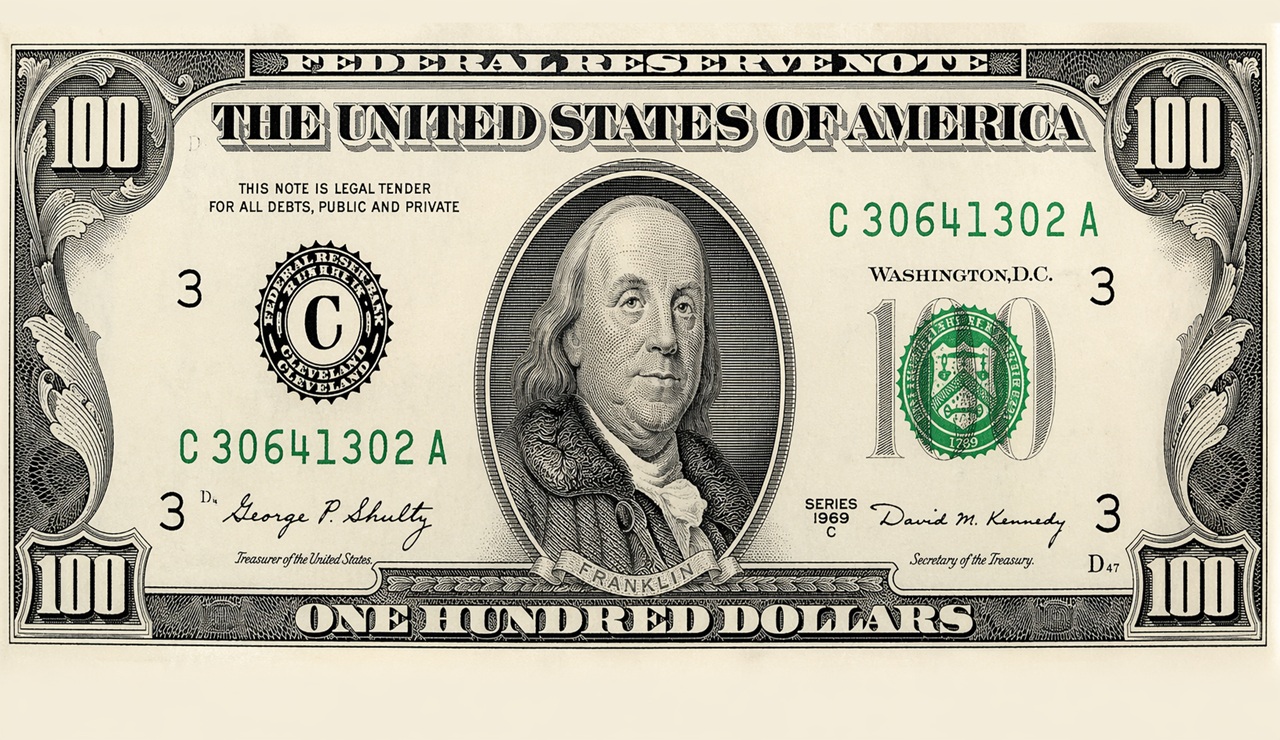
The 1969-C series is a Federal Reserve Note printed by the U.S. Bureau of Engraving and Printing. The “C” designation means it was the third major design revision within the broader 1969 series run — following 1969, 1969-A, and 1969-B.
These bills were printed across multiple Federal Reserve districts, including Boston, New York, Chicago, and others. Each district is identified by a letter (A through L) on the face of the note.
The 1969-C series features:
- Portrait of Benjamin Franklin on the obverse
- Independence Hall on the reverse
- Signatures of Treasury Secretary George P. Shultz and Treasurer Romana Acosta Bañuelos
- The familiar green Federal Reserve seal
This signature combination is unique to the 1969-C series — and that’s one reason collectors specifically seek it out.
1969-C $100 Bill Value: What Is It Worth Today?
Here’s a quick snapshot of current market values based on condition:
| Condition | Estimated Value |
|---|---|
| Fine (F) | $110 – $130 |
| Extremely Fine (XF) | $130 – $160 |
| Uncirculated (MS-63) | $175 – $250 |
| Gem Uncirculated (MS-65) | $300 – $500+ |
| Star Note (Circulated) | $150 – $300 |
| Star Note (Uncirculated) | $400 – $800+ |
In short: A circulated 1969-C $100 bill in average condition is worth slightly above face value — typically $110 to $140. However, uncirculated examples and star notes can command significantly higher premiums.
The 1969-C $100 bill value climbs sharply when the note grades Gem Uncirculated (65 EPQ or better) through third-party grading services like PCGS Currency or PMG.
Key Features That Make This Series Stand Out
Several factors drive collector interest in the 1969-C series:
- Distinctive signature pairing — The Shultz/Bañuelos combination appears on no other $100 series, making it a one-of-a-kind historical piece.
- Transition-era printing — The early 1970s marked a transitional period for U.S. currency design. These notes are among the last of the classic large-portrait style before modernization.
- Strong historical context — Issued during the Nixon administration, these bills carry genuine historical weight for collectors interested in 20th-century Americana.
- Relatively limited survival in high grades — Because these were circulated heavily, finding one in crisp, uncirculated condition is increasingly rare.
How Condition Affects the 1969-C $100 Bill Value
Condition — or grade — is the single biggest factor influencing what your 1969-C $100 bill is worth.
Currency graders use a 70-point scale. Here’s what to look for:
- Poor to Fine (1–45): Heavy folds, tears, staining, or writing. Worth slightly above face value.
- Extremely Fine (40–45): Light folds only. Crisp paper with minimal wear. Worth $130–$160.
- About Uncirculated (50–58): Faint handling but no true folds. Desirable to mid-range collectors.
- Uncirculated (60–70): No folds, bright paper, sharp corners. This is where premiums accelerate quickly.
Therefore, if you have a bill that looks crisp and untouched, consider having it professionally graded by PMG (Paper Money Guaranty) or PCGS Currency before selling.
Star Notes — The Hidden Treasure
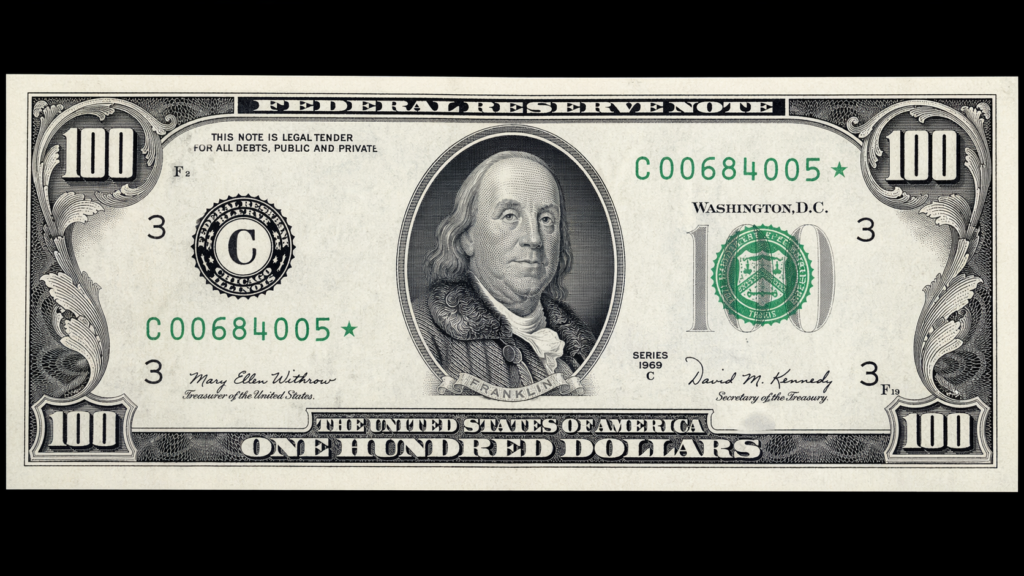
The most valuable 1969-C $100 bills are star notes — replacements printed when a standard note was damaged during production.
Star notes are identified by a ★ symbol at the start or end of the serial number.
Because they replace defective notes rather than fill a full print run, their print quantities are much lower than regular issues. However, since they weren’t widely recognized as valuable at the time, many were spent just like regular bills.
Today, a circulated 1969-C $100 star note can fetch $150–$300, while an uncirculated example can exceed $800 in premium condition.
How to Identify an Authentic 1969-C $100 Bill
Before buying or selling, verify authenticity:
- Check the series date — Look for “Series 1969-C” printed to the right of Franklin’s portrait.
- Verify signatures — Should read George P. Shultz (Treasury Secretary) and Romana Acosta Bañuelos (Treasurer).
- Examine the serial number — Eight digits, preceded by a Federal Reserve district letter.
- Look for security features — Fine-line printing in the portrait, embedded security thread (on some issues), and microprinting.
- Check paper feel — Genuine currency paper has a distinct texture different from regular paper.
For high-value specimens, always use a professional grading service to confirm authenticity.
Where to Buy or Sell a 1969-C $100 Bill
If you’re looking to buy or sell, here are the best options:
- Heritage Auctions — The world’s largest numismatic auction house; ideal for high-grade notes.
- eBay — Good for quick sales, but vet buyers and sellers carefully.
- PCGS CoinFacts / PMG Registry — Research recent auction results for pricing benchmarks.
- Local currency dealers — Convenient for quick appraisals, though offers may be lower than auction prices.
- Paper money shows — The ANA (American Numismatic Association) hosts events where dealers and collectors trade notes directly.
For external reference, the Bureau of Engraving and Printing provides official information on U.S. currency history. You can also consult PMG’s population report for grading frequency and registry data.
Key Takeaways
- The 1969-C $100 bill value ranges from ~$110 in circulated condition to $500+ in gem uncirculated grades.
- The Shultz/Bañuelos signature pair is unique to this series — a key collector identifier.
- Star notes carry the highest premiums and are actively sought by collectors.
- Professional grading by PMG or PCGS significantly increases marketability and resale value.
- Condition is the #1 factor in determining what your bill is worth.
Conclusion
The 1969-C $100 bill value is a compelling story of history, scarcity, and collector demand. What looks like a simple old banknote turns out to be a piece of American monetary history — tied to a specific moment in time and a signature combination that exists nowhere else.
Whether you’re a seasoned collector or just discovered one of these bills, now you know exactly what to look for and what it might be worth.
Ready to explore more hidden gems in old U.S. currency? Browse our guides on rare coins and vintage banknotes — you might be holding more value than you realize.
Q1: How much is a 1969-C $100 bill worth in circulated condition? A circulated 1969-C $100 bill in average condition is typically worth $110 to $140 — slightly above face value. However, lightly circulated examples in Extremely Fine grade can reach $130–$160 depending on the Federal Reserve district.
Q2: What makes the 1969-C series different from other $100 bills? The 1969-C series carries a unique signature combination: Treasury Secretary George P. Shultz and Treasurer Romana Acosta Bañuelos. This pairing appears on no other $100 Federal Reserve note series, making it distinctly collectible.
Q3: Are 1969-C $100 star notes rare? Star notes from the 1969-C series are notably scarcer than regular issues. Because they were replacement notes for damaged bills, print quantities were low. Uncirculated star notes are especially hard to find and can be worth $400–$800 or more.
Q4: Should I get my 1969-C $100 bill professionally graded? If your bill appears uncirculated or in very high grade, yes — professional grading by PMG or PCGS Currency adds credibility, increases buyer confidence, and typically results in a higher sale price at auction.
Q5: Where can I check the current value of a 1969-C $100 bill? Check recent sold listings on Heritage Auctions, eBay (completed sales), and the PMG population report. These sources reflect real-world market prices rather than theoretical guides.